Period Pain: Gentle Relief, and When It's Worth Getting Checked
Cramps can range from a dull nuisance to a day-wrecking ache. Here is a calm guide to what helps, what is normal, and the signs that your pain deserves a proper conversation with your primary care physician.
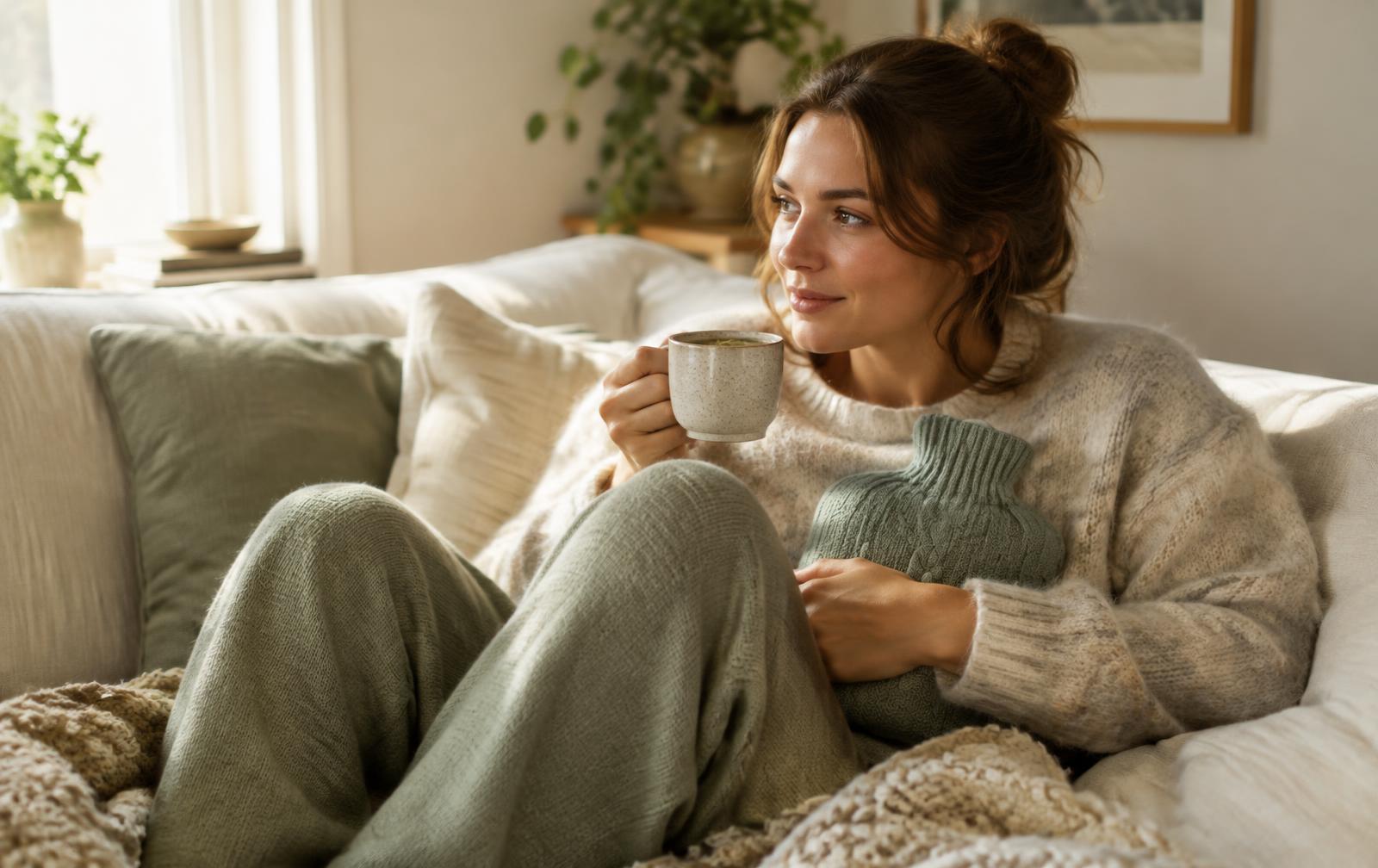
For some of us, a period arrives with little more than a mild ache and a craving for toast. For others, it brings a deep, dragging pain that makes the school run feel like a marathon and a day at work feel impossible. Many women spend years assuming that whatever they feel is simply what periods are like, and quietly getting on with it. You deserve better than quietly getting on with it.
This guide covers why period pain happens, the gentle and practical things that genuinely help, how motherhood can change your cycle, and the signs that your pain is worth a proper conversation with your primary care physician. It is not a substitute for medical advice, but it should help you feel more informed, and more confident asking for support when you need it.
Why period pain happens
During your period, the lining of your womb sheds. To help it along, your body releases chemicals called prostaglandins, which make the muscles of the womb contract. Those contractions can squeeze the blood vessels supplying the womb, briefly reducing oxygen to the muscle, and that is what you feel as cramping. Higher levels of prostaglandins tend to mean stronger contractions and more pain, which is one reason why pain often peaks in the first day or two, when levels are highest.
This kind of pain is called primary dysmenorrhoea, a rather grand name for ordinary period pain that is not caused by an underlying condition. It usually starts when bleeding starts, or just before, and settles within two or three days. It can spread to your lower back and thighs, and it sometimes comes with nausea, loose stools, headaches or a general feeling of being washed out.
Pain that has another cause
Secondary dysmenorrhoea is period pain caused by something else, such as endometriosis, adenomyosis, fibroids or pelvic inflammatory disease. It often behaves differently: it may start days before your period, last after bleeding has stopped, get steadily worse over the years, or come with pain during sex or when going to the toilet. We will come back to these signs later, because they matter.
Gentle relief that genuinely helps
Heat
Heat is one of the simplest and best-supported comforts for period cramps. A hot water bottle wrapped in a cover, a microwaveable wheat bag or a stick-on heat patch held against your lower tummy or back helps the muscles relax and can take the edge off pain surprisingly well. A warm bath does the same job, with the bonus of ten minutes behind a locked door. Always keep a layer of fabric between hot items and your skin, and never fall asleep on a heat pad.
Over-the-counter pain relief
Anti-inflammatory painkillers such as ibuprofen work by reducing prostaglandins, which is why they are often more effective for period pain than acetaminophen alone. Many women find they work best taken at the very first sign of pain, or as soon as bleeding starts, rather than waiting until the cramps are in full swing. Always follow the instructions on the packet, and check with a pharmacist first if you have asthma, stomach problems, kidney issues, are breastfeeding, or take other medicines. Your pharmacist is a wonderful, underused source of advice and you do not need an appointment.
Movement, even when it feels unappealing
When you are curled up in pain, exercise is probably the last thing you fancy. But gentle movement such as walking, stretching, swimming or yoga can ease cramps for some women by improving blood flow and releasing the body's own feel-good chemicals. This is not about a punishing workout. A slow walk around the park with the stroller, or ten minutes of gentle stretches on the living room floor while the children watch cartoons, is plenty.
- Child's pose: kneel, sit back on your heels and fold forward with your arms stretched out or by your sides
- Knees to chest: lie on your back and gently hug both knees, rocking slowly from side to side
- Cat and cow: on all fours, slowly arch and round your back in time with your breath
- A supported recline: lie back with pillows under your knees and a warm wheat bag on your tummy
Rest, food and the small things
Tiredness and stress can make pain feel bigger. Where you can, lower the bar on painful days: a simpler dinner, a later start to the housework, a movie with the children instead of an outing. Staying hydrated, eating regular meals and going easy on alcohol can help you feel less wretched overall. Some women find a TENS machine helpful too, the same kind of small device sometimes used in labor, which sends gentle electrical pulses through pads on the skin to interrupt pain signals.
How motherhood can change your periods
Many women notice their periods change after pregnancy. For some, cramps become noticeably milder after giving birth. For others, periods become heavier or more painful than before, particularly in the first few cycles. Your body has been through enormous hormonal and physical change, and it can take a while for a new pattern to settle.
Changes that do not settle after a few months, or that leave you struggling, are worth mentioning to your primary care physician rather than accepting as the new normal. Heavier periods after a baby can sometimes be linked to fibroids, adenomyosis or the type of contraception you are using, and there are often good options to help.
When period pain is worth getting checked
There is no prize for enduring pain in silence. A useful rule of thumb is this: if your periods regularly stop you doing what you need to do, such as working, looking after your children or getting out of the house, they are worth discussing with a doctor. You do not need to wait until things are unbearable.
Getting the most from your appointment
It is completely understandable to feel nervous or to worry about wasting the doctor's time. You are not. A little preparation can make the appointment far more useful. Try keeping a simple diary for two or three cycles, noting when pain starts and stops, how severe it is out of ten, what you tried, and how it affected your day. Note how heavy your bleeding is, and any other symptoms such as bowel changes, pain during sex or tiredness.
- Write down your three most important questions before you go, so they do not vanish in the moment
- Be specific about impact: "I had to leave work early twice this month" lands more clearly than "it's quite bad"
- Ask what the possible causes might be, and what the next steps are if the first treatment does not help
- You can ask for a female doctor or a chaperone if that would make you more comfortable
- If you feel dismissed, it is perfectly reasonable to ask for a second opinion or a referral to gynaecology
What treatment might look like
Depending on what is going on, your primary care physician might suggest stronger anti-inflammatory medicine, hormonal options such as the combination birth control pill, a hormonal IUD or other contraception that can make periods lighter and less painful, or further tests such as an ultrasound scan. If endometriosis or another condition is suspected, you may be referred to a specialist. Treatment is a conversation, not a prescription you must accept, so ask about the pros, cons and side effects of each option and how they fit with any plans for future pregnancies.
Being kind to yourself through it
Periods can be tangled up with all sorts of feelings: frustration at losing a day, embarrassment, worry about what pain might mean, or simple weariness at managing yet another thing on top of motherhood. All of that is understandable. Treating painful days as a time to slow down, rather than a failure to keep up, is not indulgent. It is sensible.
Most of all, please do not assume that severe pain is something you just have to live with. Ordinary period pain can usually be eased, and pain that has an underlying cause can usually be treated once it is found. Asking for help is the first and most important step, and you are absolutely worth the appointment.
If you want to look after the rest of you, too, our guide to emotional wellbeing after birth is a gentle place to start, and it pairs well with a quiet evening, a warm drink and a hot water bottle.
Written by
The Bloomymom Team
Moms, writers and friends who believe honest advice should always come with kindness.
Enjoyed this? Join our Sunday letter
Plus our free Hospital Bag Checklist.