Starting Solids: A Calm Guide to Your Baby's First Foods
Purées or finger foods? How much, how often, and what about gagging? Here is a calm, practical guide to starting solids around six months, without the pressure.
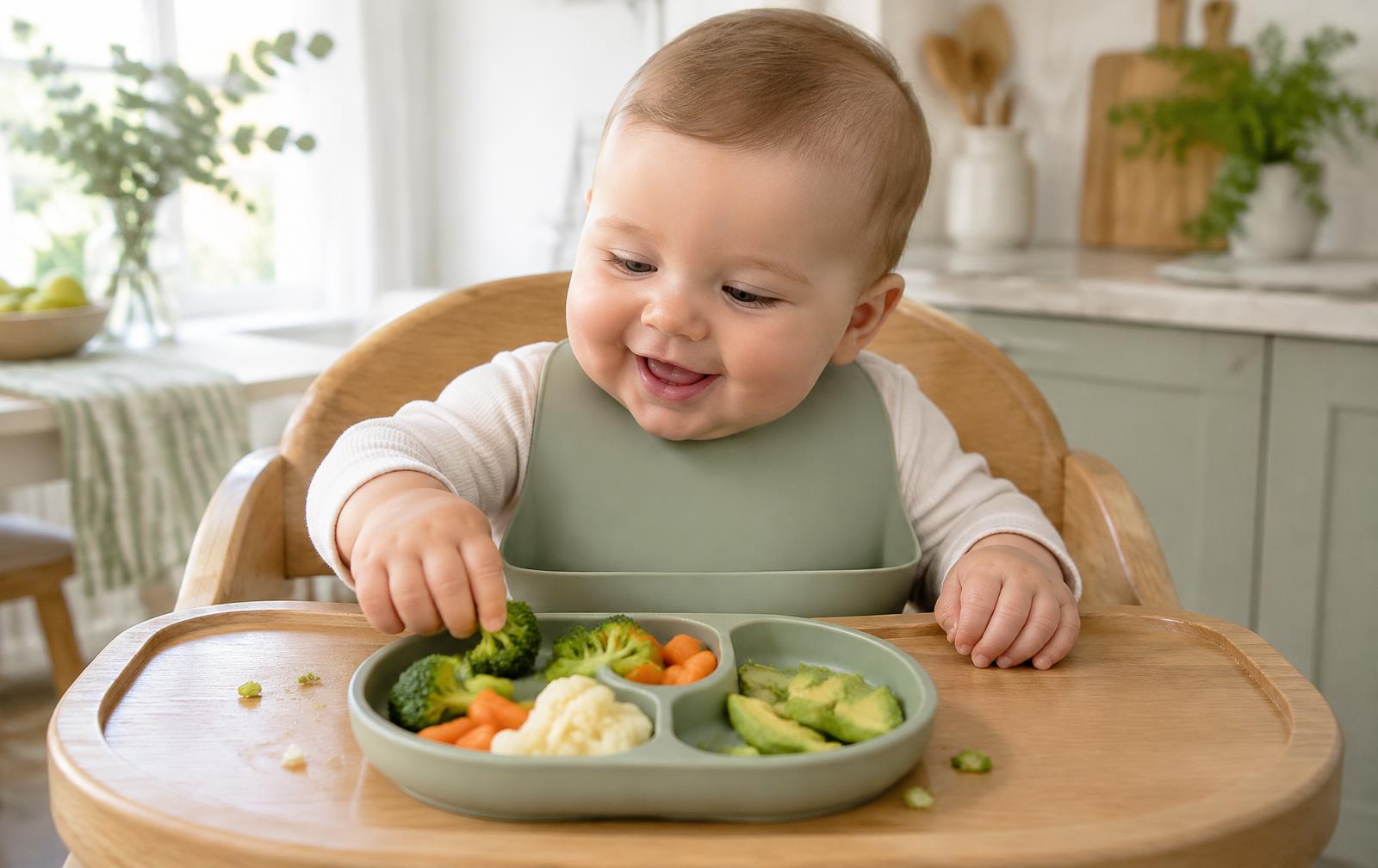
There is something wonderfully momentous about your baby's first taste of real food. The scrunched-up face at a spoonful of broccoli, the delighted squeal at a piece of soft banana, the sheer quantity of avocado that ends up in their hair. Starting solids, often called weaning, is an exciting milestone. It can also feel daunting, with conflicting advice about when to start, what to offer and how to keep your baby safe.
This guide covers readiness, first foods, choking risks and relaxed mealtimes using US guidance by default. Your baby’s pediatrician can help adapt it for prematurity, growth concerns or allergies. It is general information, not a personal feeding plan. International recommendations and services can differ, so readers elsewhere should check their own national health guidance as well.
When to start
US CDC and AAP guidance recommends introducing foods other than breast milk or infant formula at about six months, when a baby shows developmental readiness. Starting before four months is not recommended. CDC guidance describes signs including head control, sitting with support and swallowing food instead of pushing it out. Breast milk or formula remains important as complementary foods are introduced. Ask the pediatrician about your own baby rather than using age alone.
If your baby was born prematurely, or you are thinking about starting before six months for any reason, please talk to your healthcare provider or primary care physician first. They can advise on what is right for your baby.
Signs your baby is ready
There are three key signs that, together, suggest your baby is ready for solid food. They usually appear around six months.
- They can stay in a sitting position and hold their head steady
- They can coordinate their eyes, hands and mouth, looking at food, picking it up and bringing it to their mouth
- They can swallow food, rather than pushing most of it back out with their tongue
Purées, finger foods, or both?
You may have heard of baby-led weaning, where babies feed themselves soft finger foods from the start, and traditional spoon-feeding with smooth purées. Both approaches can work well, and many families use a combination. There is no single right way.
Spoon-feeding
If you start with smooth or mashed foods, offer them on a soft baby spoon and let your baby lead the pace. Wait for them to open their mouth before offering the spoon, and let them touch and hold the spoon too. Move on to thicker, lumpier textures fairly quickly, as this helps babies learn to chew and accept a wider range of foods later on.
Finger foods
Finger foods should be soft enough to squash easily between your finger and thumb, and cut into sticks or shapes about the length of your finger so your baby can grip them in their fist. Good first finger foods include steamed broccoli florets, soft-cooked carrot sticks, ripe avocado slices, banana and strips of toast.
What to offer first
It is a good idea to start with single vegetables, including bitter ones like broccoli, cauliflower and spinach, as this may help your baby get used to a wide range of flavours. You can then introduce fruits, and gradually build up to a variety of foods from all food groups.
- Vegetables, such as broccoli, carrot, parsnip, sweet potato, cauliflower and zucchini
- Fruits, such as banana, pear, apple, mango and soft berries
- Starchy foods, such as baby rice, oatmeal, pasta, potato and toast
- Protein, such as well-cooked eggs, beans, lentils, fish without bones and soft-cooked meat
- Full-fat dairy, such as plain yogurt and pasteurized cheese, from around six months
Introducing allergens
Foods that can trigger allergic reactions, such as peanuts, eggs, cows' milk, wheat, soy, seeds, fish and shellfish, can be introduced from around six months, one at a time and in very small amounts. This makes it easier to spot a reaction. Offer peanuts only as smooth peanut butter or ground peanuts, never whole, because of the choking risk. If your baby has eczema or a known food allergy, or there is a strong family history of allergies, speak to your primary care physician or healthcare provider before introducing these foods.
Foods to avoid
- Honey before twelve months
- Whole nuts, thick spoonfuls of nut butter and other choking hazards; prepare food for your baby’s skills
- Raw or undercooked eggs, meat or seafood and unpasteurized dairy
- Foods high in added sugar or salt
- High-mercury fish; follow FDA advice for age-appropriate fish choices
- Cow’s milk or plant drinks as a replacement for breast milk or infant formula before twelve months; discuss individual needs with the pediatrician
Gagging and choking
Gagging is one of the most common worries for parents starting solids, and it can look alarming. In fact, gagging is a normal, protective reflex. It helps your baby move food that is too big back to the front of their mouth. A gagging baby may cough, splutter, go red in the face, or push their tongue forward. They are usually able to sort it out themselves.
Choking is different and much less common. A choking baby may be silent, unable to cry, cough or breathe, and may turn blue. It is an emergency.
Keeping your baby safe
- Always stay with your baby while they are eating
- Sit them upright in a high chair, never reclined or in a car seat
- Cut small round foods, such as grapes and cherry tomatoes, into quarters lengthways
- Avoid hard foods, such as raw carrot or apple, unless grated or cooked until soft
- Never put food in your baby's mouth faster than they can manage
How much, and how often?
In the first few weeks, solids are about getting used to new tastes and textures, not about how much your baby eats. Start with one small meal a day, at a time that suits you both, when your baby is alert and not too hungry or tired. Gradually build up to three meals a day by around seven to nine months, and add snacks later in the first year.
Milk remains your baby's main source of nutrition for the first year, so continue to offer breast milk or formula as usual. Offer sips of water from an open or free-flow cup with meals, too.
Following your baby's lead
Babies are good at knowing when they have had enough. Signs that your baby is full include turning their head away, closing their mouth, pushing food away or getting distracted. Try not to coax them to take more. Respecting their cues helps build a healthy relationship with food.
Embracing the mess
Weaning is messy. Food will end up on the floor, in hair, behind ears and occasionally on the ceiling. It is worth accepting that from the start. Mess is part of how babies learn about food, through touching, squeezing and exploring. A wipe-clean mat under the high chair, a long-sleeved bib and a relaxed attitude will help enormously.
Try not to compare your baby's progress with others. Some babies take to solids enthusiastically from day one; others are slower and more cautious. Both are normal. If you have concerns about your baby's eating, growth or weight, your healthcare provider is there to help.
Supplements and vitamins
In the United States, CDC vitamin D guidance recommends 400 IU daily for breastfed or partly breastfed babies from shortly after birth. Formula-fed babies may not need a supplement once they drink at least 32 US fluid ounces a day; ask the pediatrician about your baby’s intake and needs. Children twelve to twenty-four months need 600 IU daily from diet and, when needed, supplementation. Do not automatically use a UK 500 mL threshold or add vitamin A and C drops to every US baby’s routine. Product concentrations vary, so check the dose with your child’s clinician.
A gentle first few weeks
In the very beginning, solid food is about exploration, not nutrition — your baby’s milk still provides almost everything they need. Think of the first few weeks as a tasting adventure rather than a meal plan. One new food at a time, once a day, at a time when your baby is alert and not too hungry or too full, is a calm way to begin.
Many families start with soft cooked vegetables — a well-cooked stick of broccoli, a little mashed sweet potato — partly because savoury flavours are worth introducing early and often. Offer, let your baby squish, smear and maybe taste, and do not worry about how much actually goes in. A baby who mostly wears their dinner is doing exactly the right kind of learning.
As the weeks pass, you can gradually move toward two and then three meals a day, following your baby’s appetite and interest. There is no race. Some babies take to food with both fists; others need weeks of gentle exposure before anything is swallowed. Both are normal.
Drinks and cups
Once your baby starts solids, you can offer small sips of water with meals. An open cup or a free-flow beaker is kindest to developing teeth and helps your baby learn to sip rather than suck — expect spills, and count them as practice. There is no need for juice or squash; water and their usual milk are all a baby needs.
Breast milk or formula remains your baby’s main drink throughout the first year. Cow’s milk can be used in cooking and on cereal from six months, but should not replace their usual milk as a main drink until after their first birthday.
Eating together as a family
One of the loveliest things about this stage is that your baby can begin joining family mealtimes. Babies learn to eat by watching the people they love eat, so sitting together — even for ten minutes — teaches more than any amount of spoon-wrangling. Where you can, adapt what the family is having rather than cooking separately: a little of your pasta, your casserole, your roast vegetables, prepared without added salt.
Try to keep mealtimes relaxed and pressure-free. Offer food, let your baby decide what and how much to eat, and avoid coaxing "one more spoonful". Mealtimes that feel safe and pleasant build a healthy relationship with food that lasts far beyond the highchair years.
Your questions, answered
My baby is six months old and not interested in food. Should I worry?
Not yet. Interest in food varies enormously, and many babies take several weeks to warm up. Keep offering small tastes once a day without pressure. If your baby is approaching seven or eight months and still refusing everything, or you are concerned about their development, have a chat with your healthcare provider.
How do I know if my baby is choking or gagging?
Gagging and choking are not the same. Gagging can be noisy, but a weak or absent cough, inability to cry or breathe, or a pale or blue color can signal choking. Learn infant first aid before starting solids, using a practical course and American Red Cross guidance. In an emergency, call 911 in the United States or the local emergency number elsewhere and act according to training; do not pause to research online. A video can support preparation, not replace hands-on training or emergency help.
Do I need to buy special baby food?
No. Shop-bought pouches and jars have their place for busy days and travel, but ordinary family food — mashed, chopped or offered as soft finger foods — is just as good and usually cheaper. Your baby does not need anything marketed specifically at babies.
What if my baby barely eats anything some days?
Appetite swings are completely normal, especially during teething, illness or developmental leaps. Look at what your baby eats across a week rather than a day, keep milk feeds going, and trust that a healthy baby will not let themselves go hungry.
Enjoy the journey
Starting solids is the start of a lifelong relationship with food, and it should be fun. Try to keep mealtimes relaxed, offer a wide variety of foods, and let your baby explore at their own pace. There will be days when nothing seems to go in, and days when they surprise you by devouring a whole plate of lentils. Both are perfectly normal.
Most of all, enjoy watching your baby discover the wonderful world of food. Those first squishy, messy meals will be over before you know it.
Written by
The Bloomymom Team
Moms, writers and friends who believe honest advice should always come with kindness.
Enjoyed this? Join our Sunday letter
Plus our free Hospital Bag Checklist.