Car Seat Safety: What Every Parent Needs to Know
A car seat is one of the most important things you will buy for your baby. Here is a calm, clear guide to choosing, fitting and using one safely, from the first drive home to the toddler years.
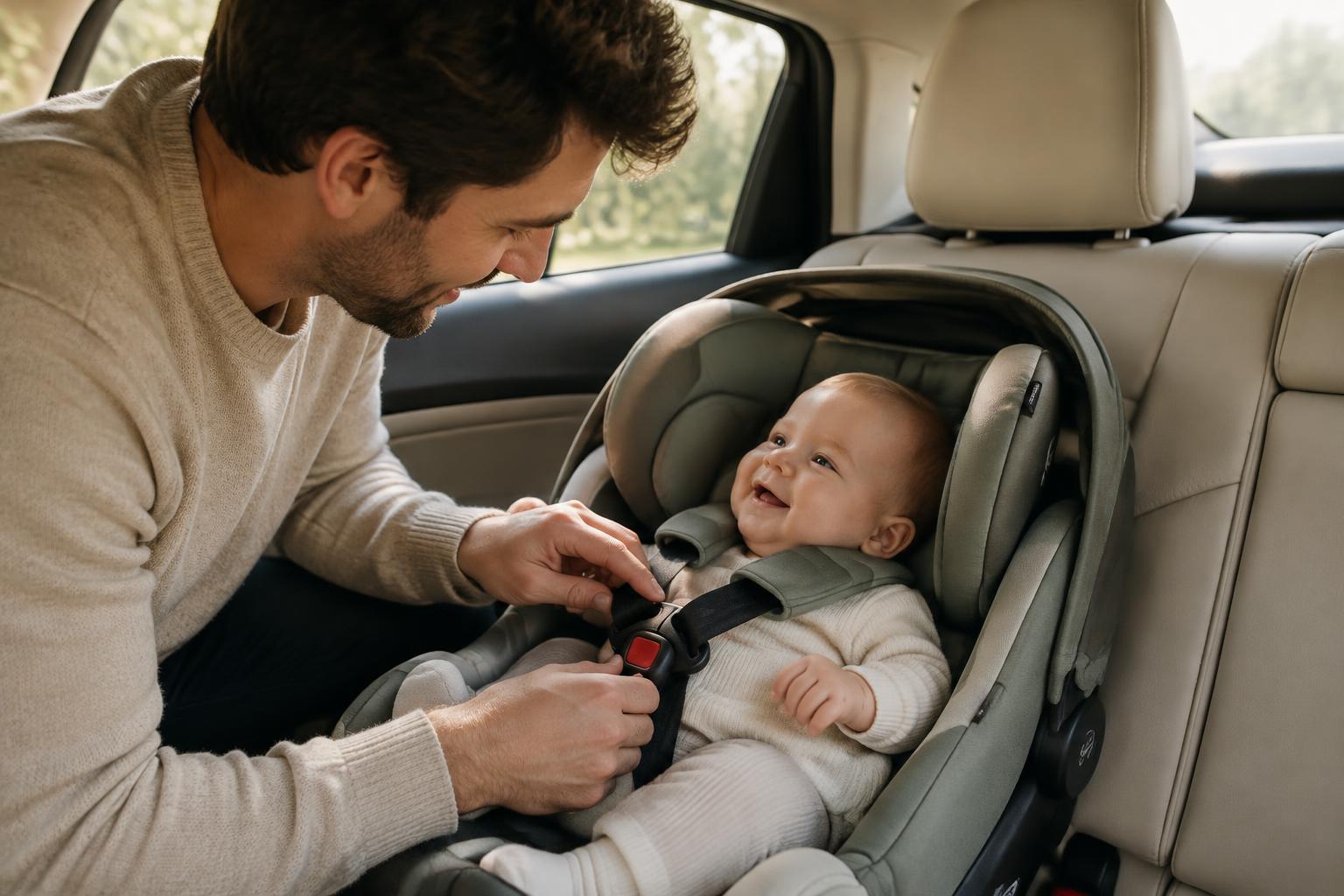
A car seat is one of the most important things you will choose for your baby. If you travel by car, you need a suitable seat for the first journey home. In the United States, terms such as rear-facing, convertible seat, LATCH and booster can feel complicated at first. This guide explains the practical questions to ask, while reminding you that the seat manual, vehicle manual and local law matter more than marketing labels.
This guide explains seat types, installation and everyday habits that help protect children. In the United States, start with NHTSA car-seat guidance and check your state’s law; minimum legal ages are not always the safest time to change stages. Product standards differ internationally, so a seat approved elsewhere is not automatically approved for US use. Ask a certified Child Passenger Safety Technician to check your installation when possible.
The basics of the law
In the United States, child-restraint laws vary by state, and seats must meet applicable federal safety standards. Choose a seat labeled for US use that fits your child’s current height and weight and your vehicle. NHTSA recommends keeping a child rear-facing until the manufacturer’s rear-facing height or weight limit is reached, then using the next appropriate restraint. There is no single nationwide age or height rule that replaces your state’s requirements. International example — UK: different child-restraint laws and approval standards apply; an EU approval label alone is not proof of US compliance.
Never place a rear-facing car seat in front of an active frontal airbag. NHTSA guidance recommends that children younger than thirteen ride in the back seat. Do not assume switching off an airbag makes an otherwise unsuitable front-seat arrangement safe; check the vehicle manual and ask a certified Child Passenger Safety Technician if your vehicle creates unusual constraints.
Understanding the types of car seat
Infant carriers
Infant-only seats are rear-facing and often include a carrying handle or removable base. A baby can outgrow one by height or weight before you expect, so use the actual limits and fit instructions rather than an estimated age. A compatible stroller attachment can be convenient, but the car seat is not a routine sleep space outside travel. Move a sleeping baby to a safe crib or bassinet as soon as practical.
Extended rear-facing seats
Convertible and all-in-one seats can often keep children rear-facing longer than an infant-only seat. The safe transition is based on the manufacturer’s rear-facing height or weight limit, not simply a birthday. Keep your child rear-facing as long as the seat allows, install it for that mode and check the harness position and recline guidance. Avoid changing stages early just because the next seat looks more grown-up.
Forward-facing and high-back booster seats
Older toddlers and children move on to forward-facing seats with a harness, then to high-back booster seats, which use the car's adult seat belt. Each stage depends on your child's height or weight, as well as the seat's instructions.
LATCH and seat-belt installation explained
In the United States, LATCH means Lower Anchors and Tethers for Children. It provides an alternative to a seat-belt installation when the seat and vehicle permit it. Read both manuals, including lower-anchor weight limits and permitted seating positions. A correctly used seat belt is also a valid installation method; do not use both methods together unless both manufacturers explicitly allow it. International example — UK and Europe: ISOFIX and i-Size/R129 terminology relates to different approval systems and should not be treated as interchangeable with US compliance.
Find the approved lower-anchor positions in your vehicle manual rather than assuming every rear-seat position has them. Use the installation method permitted for your child’s weight and your seat. For a forward-facing harnessed seat, use the top tether as directed, including with a seat-belt installation. If you are unsure about a shared anchor, center position or weight limit, ask a certified Child Passenger Safety Technician before traveling.
Choosing the right seat
- Check the seat suits your baby's height or weight and age
- Make sure it is compatible with your car; many retailers and manufacturers publish fitting lists
- Ask for a demonstration and practice fitting it in your own car before buying
- Consider whether you will move it between cars often
- Look at independent crash-test results from consumer and safety organizations
- Choose a seat you find easy to use correctly every time
Fitting it correctly
Even the best car seat cannot protect your child properly if it is not fitted correctly, and studies regularly find that many seats are fitted wrongly. Always follow the manufacturer's instructions for your seat and your car.
- Use the method permitted by both manuals: a seat belt or lower anchors, with required tether use
- At the belt path, the installed seat should move no more than one inch (2.5 cm) side to side or front to back
- Route and lock the belt exactly as instructed; do not improvise
- Check the recline indicator, especially for a newborn
- Use NHTSA’s inspection-station information to find a certified Child Passenger Safety Technician
Strapping your baby in safely
How you secure your baby every journey matters just as much as how the seat is fitted.
- For rear-facing use, position harness straps at or below the shoulders as the manual specifies
- Tighten until you cannot pinch excess webbing at the shoulder; do not use a two-finger gap as the fit test
- Place the chest clip at armpit level when the seat has one and its manual instructs it
- Keep straps flat and untwisted
- Remove bulky coats before buckling; a blanket can go over the fastened harness for warmth
- Use only inserts and accessories approved by the seat manufacturer
Journeys with a young baby
Young babies should not spend long periods in a car seat, because the semi-upright position can affect their breathing and put pressure on their developing spines. A common guideline is to avoid more than two hours at a time, with longer breaks for very young or premature babies. Plan stops on long journeys, and take your baby out of the seat for a stretch, a feed and a diaper change.
Ideally, have an adult sit next to a young baby on long drives to check they are comfortable and breathing well. Never leave a baby or child alone in a car, even for a moment, and never let a baby sleep in a car seat once you have arrived.
Second-hand seats
Car seats that have been in an accident may have hidden damage and should be replaced. For this reason, it is safest only to use a second-hand seat if you know its full history, for example from a close friend or family member, it is not too old, it comes with its instructions and all its parts, and it is suitable for your car. Avoid buying second-hand seats from strangers or online marketplaces.
When to move up a stage
It can be tempting to move your child to the next seat as soon as possible, especially if they seem uncomfortable or cramped. But each step up generally offers a little less protection, so try to keep them in each stage for as long as the seat allows. For infant carriers, your baby is ready to move up when they reach the maximum height or weight for the seat, or when the top of their head is level with the top of the seat, not simply when their feet touch the back of the car seat.
Keeping the seat in good condition
Check your car seat regularly for wear: look at the harness for fraying, test that the buckle clicks firmly and releases easily, and make sure no small toys or crumbs have found their way into the mechanism. Wash covers according to the instructions, and never cut, adjust or add to the straps. If your car is involved in a collision, even a minor one, contact the seat manufacturer for advice, as many recommend replacing the seat.
Car seats on taxis, planes and trips abroad
Rules can be different when you travel in a taxi or minicab, on a plane or abroad, so it is worth checking before you go. Some airlines allow approved car seats on board; others do not, and many offer their own infant seat belts. If you are hiring a car abroad, consider taking your own seat, as hire seats can vary in quality and may not come with instructions. Wherever you are, the safest choice is always a suitable seat, correctly fitted, with your child properly secured.
For older children, the same principle applies: a few extra minutes spent fitting a booster properly is always worthwhile, however short the journey.
Common fitting mistakes
Studies of real-world car seat use consistently find that a large share of seats have some kind of fitting error — which means if you have ever doubted yours, you are in good company, and a quick check is always worthwhile. The mistakes fitters see most often:
- A loose harness: use the pinch test at the shoulder, not a two-finger gap
- A chest clip away from armpit level when the seat manual requires that position
- Movement exceeding one inch (2.5 cm) at the belt path in either direction
- The wrong recline angle, allowing a young baby’s head to fall forward
- Incorrect belt routing or lower-anchor use beyond permitted limits
- Moving to the next stage before the current height or weight limit is reached
If any of these sound familiar, review both manuals and correct the installation before the next trip. NHTSA’s car-seat resources can help you find an inspection station or certified Child Passenger Safety Technician. Some checks are free, but availability varies, so ask locally. A professional check is more useful than guessing whether a belt route or harness feels “close enough.”
Winter coats and bulky clothing
This one surprises many parents: thick coats and puffy snowsuits should not be worn in a car seat. In a collision, the padding compresses, leaving the harness suddenly loose. Instead, strap your baby in wearing normal indoor clothes, then tuck a blanket over the harness for warmth. The same applies to wearable blankets and thick stroller suits — cozy in the stroller, unsafe in the car.
Your questions, answered
How long can my baby stay in their car seat?
For young babies, the general guidance is to avoid stretches longer than about two hours in a car seat, because the semi-upright position can affect breathing in very young infants. On long journeys, plan regular breaks to take your baby out of the seat for a stretch and a feed.
Is it safe to use a second-hand car seat?
Only if you know its full history. A seat that has been in any accident, however minor, may have invisible damage, and seats also have expiry dates because materials degrade over time. Unless it comes from someone you trust completely, with the manual and a known history, a new seat is the safer choice.
When should my baby move to the next stage?
Keep your child in the current stage until the manufacturer’s relevant height or weight limit is reached, and follow your state’s law. For rear-facing seats, NHTSA guidance is to remain rear-facing as long as the seat permits, not to turn forward at a universal fifteen-month milestone. Later transitions to a harness, booster and adult belt also depend on correct fit. Ask a certified technician if you are unsure which limit your child has reached.
Do I need a car seat in a taxi?
The law makes some allowances for short, unexpected taxi journeys, but a properly fitted car seat is always the safest choice wherever one is available. For regular taxi or lift-share travel, many families keep a lightweight, easy-fit seat or a travel-friendly option for exactly this reason.
Every journey, every time
Car seat safety comes down to a few simple habits: the right seat, fitted correctly, with your baby strapped in snugly on every single journey, however short. It might take a little time to get used to at first, but soon it will become second nature.
Drive gently, take regular breaks and enjoy those first adventures together. With a well-fitted seat, you can relax a little more and focus on the road ahead.
Read next: Choosing a Stroller: A Calm Guide to Finding the Right One
Read next: Babywearing: A Gentle Guide to Slings and Carriers
Written by
The Bloomymom Team
Moms, writers and friends who believe honest advice should always come with kindness.
Enjoyed this? Join our Sunday letter
Plus our free Hospital Bag Checklist.