Creating a Calm, Safe Nursery: What Your Baby Really Needs
A beautiful nursery is lovely, but a safe and calm one matters most. Here is how to plan a nursery that supports safer sleep, easy night feeds and a peaceful atmosphere, without overspending.
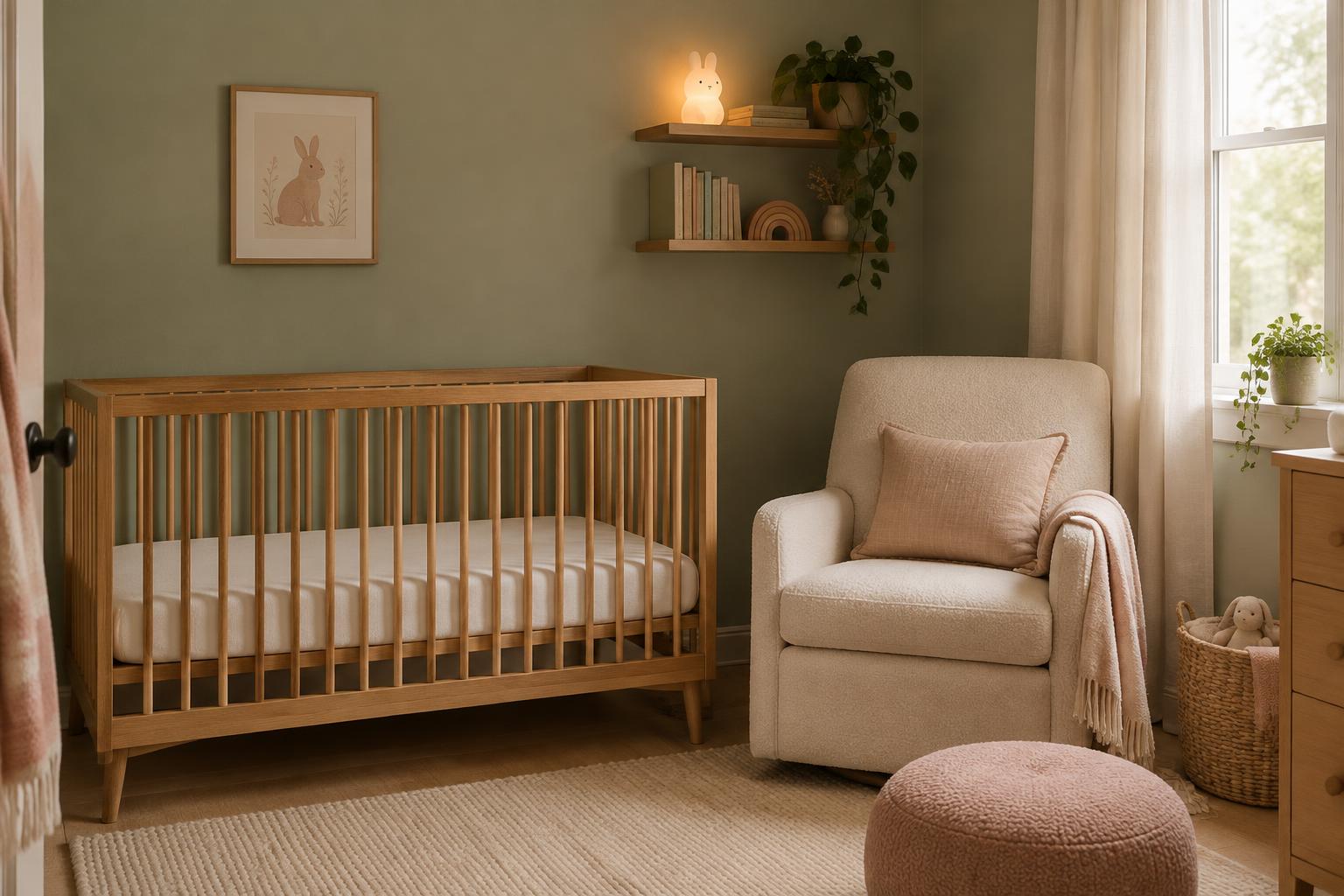
Preparing a nursery can be one of the most exciting parts of expecting a baby. Many parents spend happy hours choosing paint colors, picking out prints and imagining their little one sleeping peacefully in a beautiful crib. It is a lovely way to welcome your baby, and to feel ready.
Yet when it comes to what babies really need, the list is surprisingly short. A calm, safe space for sleep, a comfortable place for feeds and somewhere practical for diaper changes are what matter most. This guide explains how to create a nursery that is safe, soothing and practical, whatever your space and budget.
Where your baby will sleep
It is worth knowing from the start that the safest place for your baby to sleep, for both daytime naps and night-time sleep, is in a crib or safety-approved bassinet in the same room as you for the first six months. So while the nursery may become your baby's bedroom later, in the early months it may be used mainly for changing, dressing, storing clothes and the occasional feed.
That means you might not need to rush to finish it before your baby arrives. Some families set up a crib or safety-approved bassinet next to their own bed and create the nursery gradually.
A safe crib
Whether it is in your room or the nursery, your baby's crib is the most important piece of furniture you will buy. Keeping it simple is the safest approach.
- Choose a crib or bassinet intended for infant sleep and meeting current US federal requirements; check recalls
- Use the manufacturer-approved firm, flat mattress with a snug fit and a fitted sheet
- Keep pillows, blankets, bumpers, toys, nests and positioners out
- If needed, use a correctly sized, non-weighted wearable blanket rather than loose bedding
- Place your baby on their back for every sleep
- Follow assembly and age or development limits; do not use a recalled or drop-side crib
It can feel tempting to make the crib look cozy with blankets, cushions and toys, but a bare crib is the safest crib. Your baby will be perfectly happy with a fitted sheet and a wearable blanket.
Where to place the crib
- Away from windows, radiators, heaters and direct sunlight
- Away from blind cords, curtain ties and electrical cables
- Away from shelves or pictures that could fall
- Where you can easily reach your baby during the night
Keeping the room at the right temperature
Avoiding overheating matters more than aiming for a single room-temperature number. CDC guidance advises against covering a baby’s head or letting them get too hot. Keep the room comfortable for an adult, use suitable light sleep clothing and watch for sweating or a hot chest. A room thermometer can be helpful, but clothing, humidity and your baby’s health also matter. Ask the pediatrician if you are unsure rather than treating one Celsius range as universal.
Dress your baby for the room temperature, rather than wrapping them up too warmly. To check whether they are too hot, feel their chest or the back of their neck rather than their hands and feet, which often feel cool. If they are sweaty or hot to the touch, remove a layer.
A comfortable place to feed
You will spend many hours feeding your baby, so a comfortable spot is worth thinking about. It does not have to be an expensive nursing chair; any supportive chair with arms and a cushion for your back will do.
- A small table or shelf nearby for water, snacks, muslins and your phone
- A cushion or nursing pillow to support your baby and your arms
- A soft, dim light for night feeds
- A footstool to raise your feet
Never fall asleep with your baby on a couch or armchair. Return them to their own firm, flat sleep space before you sleep. If there is a chance you might fall asleep while feeding in bed, remove pillows, blankets and other soft items near the baby in advance, and return the baby to their own crib or bassinet as soon as you wake. This does not make bed-sharing safe or change the recommendation to share a room without sharing a bed. Ask for help when you are exhausted.
Diaper changing
Changing tables are handy but not essential. A changing mat on the floor is perfectly safe, and many parents prefer it as a baby cannot roll off. If you use a changing table, never leave your baby on it, even for a moment, and keep everything you need within reach.
- Diapers and wipes or cotton wool
- Barrier cream
- Spare clothes and bodysuits
- A diaper trash can or bags
- A muslin cloth or two
Creating a calm atmosphere
A calm, soothing room can help both you and your baby to relax. Soft, muted colors, such as sage, cream, blush or pale grey, tend to feel restful. Blackout blinds or curtains can help with daytime naps and lighter summer evenings, as long as cords are secured out of reach.
Keep lighting soft, especially at night. A dim night light means you can feed and change your baby without fully waking either of you. Some parents also use white noise to mask household sounds.
Storage that works
Babies come with a surprising amount of stuff. A chest of drawers is often more useful than a wardrobe in the early years, as baby clothes are small. Baskets and boxes are great for diapers, muslins, blankets and toys. Secure all tall or heavy furniture, such as chests of drawers and bookcases, to the wall with anti-tip fittings, as babies and toddlers soon start to climb.
Budget-friendly nursery tips
- Start with the essentials: a safe crib, mattress and wearable blanket
- Buy second-hand furniture such as drawers and chairs, but always buy a new mattress if you can
- Choose a crib that converts into a toddler bed
- Use furniture you already have
- Add personal touches with prints, photos and handmade items
- Ask family and friends if they have anything to pass on
As your baby grows
Your nursery will change as your baby grows. Once they start to roll, sit and pull themselves up, you will need to lower the crib mattress to the lowest setting. As they become more mobile, you will want to babyproof the room: covering plug sockets if needed, securing furniture and keeping small objects, cords and medicines out of reach.
Remember, too, that a nursery is for you as well as your baby. A comfortable chair, a soft blanket and a calm space can make the long nights a little easier and the quiet moments even sweeter.
Moving your baby into their own room
At some point after six months, many families decide it is time for their baby to sleep in the nursery. There is no exact right moment; it often depends on how everyone is sleeping, how much space you have and how you feel. Some parents are ready to move their baby at six months, while others prefer to wait a little longer.
To make the move easier, spend time in the nursery during the day first, so your baby becomes familiar with it. Use it for diaper changes, quiet play and stories. Keep the bedtime routine the same, so that the only thing that changes is the room. A baby monitor can give you peace of mind, and it is completely normal to check on your baby more often than you need to in the first few nights.
If your baby has been used to the sound of you breathing and moving nearby, the new room may feel very quiet at first. Soft white noise and a familiar wearable blanket can help them settle.
Sharing your room in the early months
For at least the first six months, the safest place for your baby to sleep is in their own crib or safety-approved bassinet in your room — which means the nursery’s first job is to be a lovely, calm space you enjoy, rather than somewhere your baby sleeps straight away. Many parents find this takes the pressure off beautifully: there is no deadline for the nursery to be "finished".
If you are setting up a bedside sleeping space, the same safe-sleep principles apply: a firm, flat mattress, a clear crib with no loose bedding, pillows or bumpers, and a room that is not too hot. Keep night-time essentials — diapers, wipes, muslins, a spare sleeper — within arm’s reach of where you will feed and change your baby, and your future 3am self will thank you.
Your questions, answered
Does the nursery need to be finished before the baby arrives?
Not at all. Since your baby will sleep in your room for the first months, the nursery can come together slowly. If painting or assembling furniture feels like one task too many in late pregnancy, let it wait — a calm, rested mother matters far more than a finished feature wall.
What temperature should the room be?
There is no single exact thermostat setting that makes every sleep situation safe. Keep the room comfortable for an adult and avoid overheating, following CDC safe-sleep guidance. Dress your baby for the conditions, keep their head uncovered and watch for sweating or a hot chest. International example — UK: some guidance uses a 61–68°F (16–20°C) range, but that is not a universal US requirement. Ask your pediatrician about individual concerns, particularly if your baby is unwell or was born early.
Are crib bumpers, pillows and nests safe?
No. CDC guidance recommends a firm, flat mattress with a fitted sheet and no blankets, pillows, bumpers, toys or positioners. A correctly sized non-weighted wearable blanket can provide warmth without loose bedding. Do not add a nest or padded insert because it looks comfortable, and avoid weighted sleep products. The safest-looking photo is not always a safe sleep setup; check that the product itself is intended and approved for infant sleep.
How can I make the nursery feel calm on a small budget?
Calm comes from light, order and softness rather than expensive furniture. Warm-white lamps instead of harsh overhead lighting, a comfortable chair, a few prints or photos you love, and good storage to keep clutter out of sight will do more than any themed decor set. Second-hand furniture, freshly cleaned, works beautifully too.
A space filled with love
Your nursery does not need to look like a magazine picture to be perfect. What matters most is that it is safe, calm and practical, and filled with love.
So choose a few things you adore, keep the crib simple and enjoy preparing this little space. Before long, it will be full of memories: sleepy cuddles, bedtime stories and the soft glow of a night light as you watch your baby sleep.
Read next: Babyproofing Your Home: A Calm, Room-by-Room Guide
Read next: Getting Ready for Baby: A Calm Third-Trimester Plan
Written by
The Bloomymom Team
Moms, writers and friends who believe honest advice should always come with kindness.
Enjoyed this? Join our Sunday letter
Plus our free Hospital Bag Checklist.