Talking to Your Daughter About Periods: A Gentle Guide
The period talk does not have to be a single, nerve-racking conversation. Here is how to start early, answer honestly, and help your daughter feel ready, informed and unembarrassed.
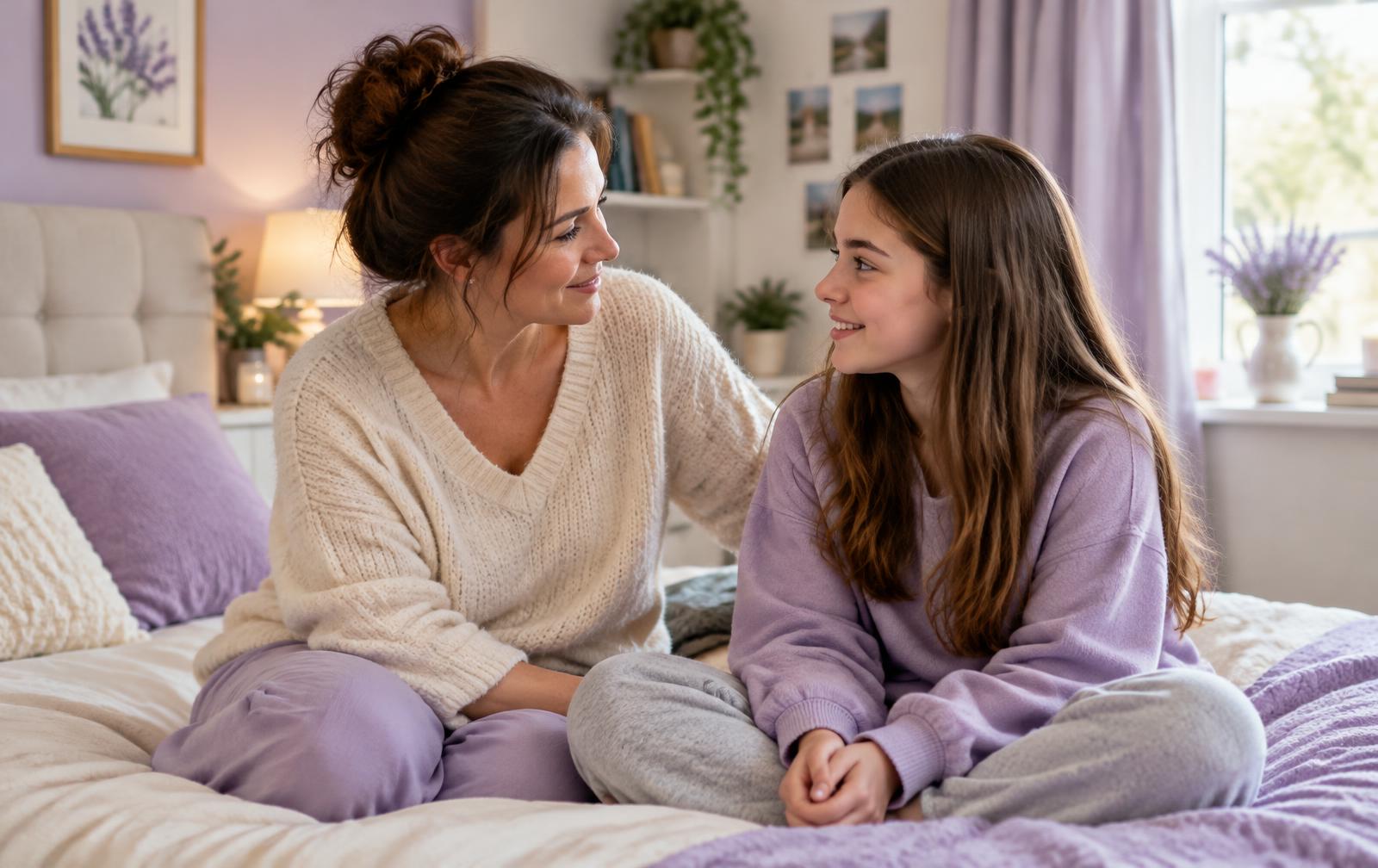
Many of us remember our own first period with a mixture of confusion and embarrassment. Perhaps nobody really explained what was happening, or there was one awkward talk and a leaflet left on the bed. It is completely natural to want something better for your own daughter, and it is also completely natural to feel unsure where to begin.
The good news is that the most helpful approach is not one big talk at all. It is lots of small, honest, ordinary conversations over time. This guide covers when to start, what to say at different ages, how to put together a first period kit, and how to keep the door open so she knows she can always come to you.
When to start talking
The age of a first period varies, so begin gentle conversations before your child needs the information urgently. Talk about body changes in small, matter-of-fact steps and invite questions without embarrassment. Do not assume every child develops on the same timetable. If puberty begins unusually early, there are no expected signs of development, or you have concerns about growth, ask the pediatrician for individualized advice. The aim is familiarity and reassurance, not a deadline to compare with friends.
If your daughter is older and you have not talked yet, please do not worry. It is never too late, and starting now is far better than not starting at all. A simple "I realized we've never really talked about this properly" is a perfectly good opener.
What to say at different ages
Younger children
Young children often notice periods long before anyone explains them, perhaps spotting a pad in the bathroom trash can or asking why you need the toilet so urgently. Simple, matter-of-fact answers are ideal. Something like: "Grown-up women have a bit of blood come out of their body once a month. It's called a period. It's healthy and normal, and it means my body is working the way it should."
Around eight to ten
This is a good time to explain a little more about how periods work and why they happen. You might explain that the womb builds a soft lining each month in case a baby ever grows there, and when it is not needed, it comes out as a period over a few days. Talk about what periods feel like, how long they last, and the products people use. Showing her a pad, a pair of period pants or a tampon and letting her look at them takes away a lot of mystery.
Nearer the time
As puberty gets going, the conversations can become more practical: how to use and change products, how to deal with a leak at school, what to do if her period starts when you are not around, and how to manage cramps. This is also a lovely time to talk about how puberty can affect feelings, sleep and confidence, and to reassure her that every body changes at its own pace.
- Use the correct names for body parts, such as vulva, vagina and womb, so she has the words she needs
- Answer the question she asked, then pause; she will ask for more if she wants it
- It is fine to say "That's a great question, let me find out" if you are not sure
- Share a little of your own experience if you are comfortable, including the funny or awkward bits
- Keep your tone calm and ordinary; she will take her cue about periods from you
Putting together a first period kit
A small, discreet kit that lives in her school bag can make an enormous difference to her confidence. Knowing she is prepared means that if her period starts during math, she can deal with it calmly rather than panicking. Let her choose a pouch she likes, and pack it together so she knows exactly what is inside and how to use it.
- Two or three pads, ideally thin ones designed for teens, or a pair of period pants
- A spare pair of underwear in a small sealed bag
- A few wipes and a small bag for wrapping used products
- A note with your phone number and a reminder that she can always call you
- If she is comfortable, a small pack of pain relief agreed with you and in line with school policy
Ask the school how it supports students who have periods, including bathroom access, spare products and a trusted adult to approach. In the United States, product provision varies by state, district and school; do not assume a universal entitlement. Pack a discreet kit and let your child know how to ask for help. International example — England: school period-product provision operates through different local arrangements. Knowing the plan can make an unexpected first period much less frightening.
When her period arrives
When the day comes, try to keep your reaction low-key and warm. Some girls would love a small celebration, such as a hot chocolate or a new pair of pajamas, while others would rather not mention it at all. Follow her lead. Check she has what she needs, remind her what is normal, and let her know the first few periods can be irregular, with gaps of weeks or even months between them.
Keeping the door open
The aim is not to deliver a perfect speech. It is to show your daughter that her body is nothing to be ashamed of, and that you are someone she can talk to about anything, however awkward. If a conversation goes badly, or you say something you wish you had phrased differently, you can always come back to it. "I've been thinking about what you asked the other day" is a lovely way to try again.
These early conversations lay the foundations for the bigger ones that come with the teenage years, about bodies, friendships, relationships and feelings. Every calm, honest exchange now makes it a little easier for her to come to you later. That is worth a few blushes along the way.
If you are navigating the rollercoaster of emotions that comes with growing children, our guide to calmly handling big feelings in younger children has ideas that carry surprisingly well into the tween years.
Handling worries and questions she might have
Girls often have worries they feel too shy to voice. Will everyone know? What if it leaks through my school pants? Does it hurt? Will I still be able to do PE and go swimming? It can help to raise these gently yourself, so she knows they are ordinary questions. Reassure her that nobody can tell she is on her period just by looking at her, that leaks happen to almost everyone at some point and can be dealt with, and that most girls carry on with sport and normal life as usual.
Books written for girls her age can be a brilliant companion to your conversations, because she can read them privately and come back to you with questions. Look for ones that are friendly, accurate and inclusive. Leaving a book somewhere she can find it, with a casual "this looked good, have a flick through if you like", takes the pressure off both of you.
Read next: Handling Toddler Tantrums Calmly
Read next: Period Pain: Gentle Relief, and When It's Worth Getting Checked
Written by
The Bloomymom Team
Moms, writers and friends who believe honest advice should always come with kindness.
Enjoyed this? Join our Sunday letter
Plus our free Hospital Bag Checklist.