Tummy Time and Early Play: Helping Your Baby Grow Stronger
Tummy time builds strength for rolling, sitting and crawling, but many babies protest at first. Here is why it matters, how to make it enjoyable, and simple play ideas for the first year.
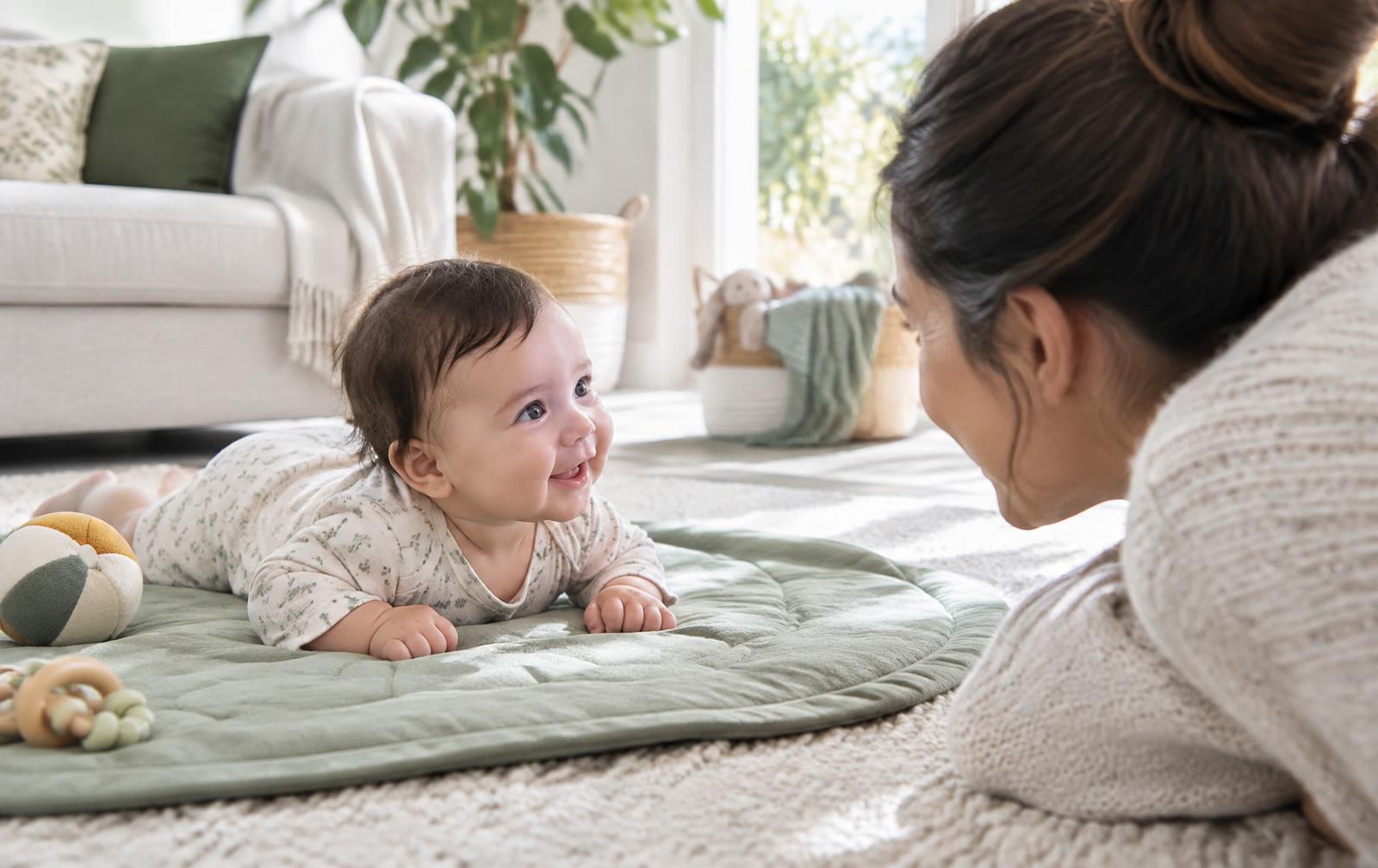
For the first few weeks of life, your baby spends most of their time lying on their back, being carried or curled up in your arms. Safe sleep advice means they should always sleep on their back, and that is exactly right. But when they are awake, spending some time on their tummy helps them build the strength they need for rolling, sitting, crawling and, eventually, walking.
Tummy time is simple in theory, but many babies are not keen at first, which can make it feel like a battle. This guide explains why tummy time matters, how to make it more enjoyable for your baby, how it fits into early play, and the milestones you can look forward to in the first year.
Why tummy time matters
When your baby lies on their tummy, they have to work against gravity to lift their head, push up on their arms and look around. This builds strength in their neck, shoulders, back and arms, which lays the foundations for later physical milestones. It also helps them develop coordination, balance and an awareness of their own body.
Tummy time can also help prevent flat spots from developing on the back of your baby's head, which can happen when babies spend a lot of time lying on their backs. And it gives your baby a whole new view of the world, which is fascinating for a curious little mind.
When to start and how much
You can start tummy time from birth, as soon as you and your baby feel ready. In the early days, it might just be a minute or two at a time, a few times a day, lying on your chest while you recline. Gradually increase the time as your baby gets stronger and more used to it.
There is no exact amount your baby needs, but many experts suggest building up to around an hour a day in total, spread across many short sessions, by around three months. Little and often is the key.
Making tummy time enjoyable
It is very common for babies to protest during tummy time, particularly in the early weeks. Lifting their heavy head is hard work. Rather than giving up, try some of these ideas to make it more enjoyable.
- Start on your chest: lie back on the sofa or bed and lay your baby on your chest, face to face
- Get down on their level: lie on the floor facing them, so they can see your face and hear your voice
- Use a rolled-up towel: place it under their chest and armpits for a little extra support
- Try a lap lie: lay your baby across your knees, tummy down, gently stroking their back
- Pick your moment: avoid tummy time straight after a feed, or when your baby is tired or hungry
- Add interest: place a baby-safe mirror, a high-contrast card or a colourful toy in front of them
If your baby really dislikes it
If your baby cries every time, stop and try again later. Short, positive sessions are better than long, unhappy ones. Carrying your baby in different positions, such as tummy down along your forearm in a "tiger in the tree" hold, also builds strength. Most babies gradually come to enjoy tummy time as they get stronger and can see more.
Early play ideas
Play is how babies learn about the world, and it does not need to be complicated or involve lots of toys. In the early months, you are your baby's favorite toy. Simple, everyday interactions help their brain develop and strengthen your bond.
Birth to three months
- Talk, sing and read to your baby, even if they cannot understand the words yet
- Make faces, smile and stick your tongue out; young babies often try to copy
- Show them high-contrast black-and-white pictures, which are easiest for newborns to see
- Gently move their arms and legs in a cycling motion during diaper changes
Three to six months
- Offer toys to grasp and shake, such as soft rattles
- Play peekaboo, which babies start to love around this age
- Let them reach for toys just out of reach during tummy time
- Lie them under a baby gym with hanging toys to bat at
Six to twelve months
- Roll a ball back and forth as they start to sit up
- Offer stacking cups, boxes and simple shape sorters
- Make a treasure basket of safe household objects, such as wooden spoons and fabric scraps
- Encourage crawling by placing a favorite toy just out of reach
When to ask for advice
Your baby will have regular development reviews with your health visiting team, and these are a good time to raise any questions. If you have concerns in between, you do not need to wait.
Making play part of everyday life
You do not need to set aside special time or buy expensive toys to play with your baby. Everyday moments, such as diaper changes, bath time, getting dressed and cooking dinner, are full of opportunities for interaction. Narrate what you are doing, name objects, sing songs and respond to your baby's babbles as though you are having a conversation. These simple exchanges are some of the most powerful ways to support your baby's language and social development.
Enjoy the little moments
Tummy time and play are not about hitting targets or rushing milestones. They are about spending time together, watching your baby discover the world, and supporting them as they grow stronger every day. Some days your baby will happily play for ages; other days they will want nothing but cuddles. Both are perfectly fine.
Relax, follow your baby's lead and enjoy these fleeting early months. Before you know it, that wobbly little head will be lifting proudly, and your baby will be off exploring on their own.
Read next: Baby Sleep Basics: The First Three Months
Read next: Starting Solids: A Calm Guide to Your Baby's First Foods
Written by
The Bloomymom Team
Moms, writers and friends who believe honest advice should always come with kindness.
Enjoyed this? Join our Sunday letter
Plus our free Hospital Bag Checklist.