Baby Essentials on a Budget: What You Really Need and Where to Save
Babies need far less than the shops suggest. Here is a calm, honest guide to what is genuinely essential, where it is worth spending and where you can happily save.
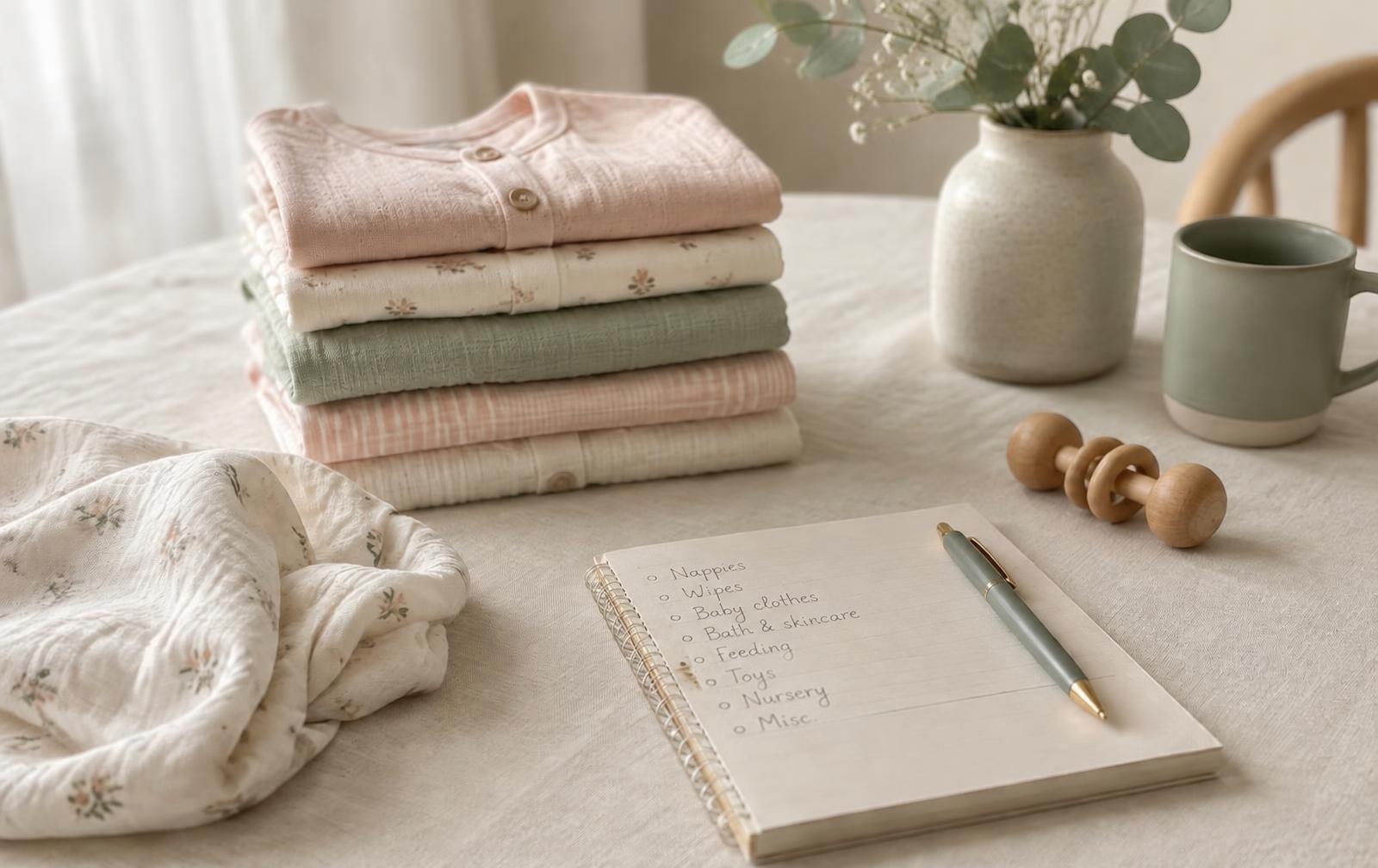
Walk into any baby shop and it is easy to feel overwhelmed. Aisles of gadgets, matching nursery sets, special trash cans, warmers, monitors and clothes for every occasion can make it seem as though a baby needs a small fortune's worth of equipment before they even arrive. Add in well-meaning advice from friends, family and social media, and many expectant parents find themselves buying far more than they will ever use.
The reassuring truth is that newborn babies need surprisingly little. They need to be fed, kept warm, clean and safe, and above all held and loved. Everything else is optional. This guide walks through what is genuinely essential, where it is worth investing in quality and safety, and where you can save without a second thought.
Start with a simple plan
Before you buy anything, it can help to sit down with your partner, or a trusted friend, and write a short list of what you will need for the first six to eight weeks. Babies grow and change quickly, and many items you might be tempted to buy early will not be needed for months, if at all. By waiting, you will have a much better sense of your baby's personality, your routines and your home, and can buy only what actually helps.
Set a rough budget, too, even if it is only an estimate. Knowing what you are comfortable spending makes it much easier to say no to impulse buys and to notice when a so-called bargain is not really a saving at all.
The genuine essentials
Every family is different, but most newborns need a fairly short list of things in the early weeks.
Sleeping
- A safety-approved crib or bassinet with its firm, flat, snug-fitting mattress
- Two or three fitted sheets compatible with that mattress
- A correctly sized non-weighted wearable blanket if needed; no loose blankets in the sleep space
In the United States, CDC safe-sleep advice recommends placing babies on their backs on a firm, flat mattress in a safety-approved crib or bassinet, with only a fitted sheet and no blankets, pillows, bumpers or toys. A higher price does not make a sleep space safer. Choose a mattress approved for the product and check its condition and fit. International example — UK: The Lullaby Trust offers local advice, but follow the standards applicable to your baby’s country.
Feeding
- If breastfeeding: a few muslins, breast pads and perhaps a comfortable nursing bra
- If formula feeding: bottles, nipples, a sterilizer or sterilizing method and infant formula
- Muslin cloths for spills, burps and everything in between
Clothing
- Six to eight sleepers with snaps or zippers that make diaper changes easy
- Six to eight short or long-sleeved bodysuits
- Two or three cardigans or soft sweaters, depending on the season
- A hat, scratch mitts and socks, plus a snowsuit or warm pramsuit in winter
Changing and bathing
- Diapers, either disposable or reusable, and plenty of them
- Cotton wool and water, or gentle unperfumed wipes
- A changing mat, which can be used on the floor, bed or a table
- Two or three soft towels and a mild, unperfumed baby wash, if you use one at all
Getting out and about
- A car seat that is suitable for your baby's height and weight, if you will travel by car
- A stroller, stroller, sling or carrier, depending on how you like to get around
- A bag for diapers and spare clothes, which can simply be a bag you already own
Where it is worth spending
Saving money is sensible, but a few items are worth prioritising for safety, comfort or durability.
- A new car seat that meets current safety standards and fits your car correctly
- A new crib mattress that fits the crib snugly with no gaps around the edges
- A stroller or carrier that suits your daily life and is comfortable for you to use
- Anything you will use every single day, where a little extra quality can make life easier
Car seats deserve particular care. A second-hand seat may have been in an accident and suffered damage that is not visible, and older seats may no longer meet current standards. If you do accept one, it should only be from someone you know and trust, who can tell you its full history, and it should come with the instructions and all its parts.
Where you can happily save
Many baby items are used for only a few weeks or months, which makes them perfect for saving on. Babies are not fussy about brand names, matching sets or the latest colors.
- Newborn clothes, which are often outgrown before they are worn out
- Moses baskets and baby baths, used for a short time and easy to find pre-loved
- Toys, books and play mats, which friends and family are often keen to pass on
- Changing bags, as any roomy bag you already own will do
- Nursery décor, which can come later, once you know what you actually need
Supermarket own-brand diapers, wipes and baby toiletries are often perfectly good and considerably cheaper than premium brands. It can be worth trying a small pack of a few different options before you buy in bulk, as every baby suits different diapers.
Things you can usually skip
Some items are marketed heavily to new parents but are rarely needed. Every family is different, so if something genuinely makes your life easier, that is what matters. But you can usually do without:
- Wipe warmers, diaper trash cans with special refills and bottle preparation gadgets
- Crib bumpers, pillows and positioners, which are not recommended for safe sleep
- Baby shoes before your baby is walking
- Expensive outfits for the newborn weeks
- Large quantities of one size of clothing or diapers before you know how quickly your baby will grow
Asking for help, and accepting it
Friends and family often want to help when a baby is on the way. If people ask what you need, it is fine to be specific. You might suggest diapers in a larger size, a contribution toward the stroller, a home-cooked meal for the freezer or a voucher for later on. Some parents create a simple list to share, so that gifts are genuinely useful.
Hand-me-downs are one of the kindest, most practical gifts of all. Many parents are glad to see their baby's things go to a good home, and accepting them is not a sign that you cannot afford new. It is simply sensible, and kinder to the planet.
Financial support you may be entitled to
If money is tight, start with the US HHS family-benefits guide and WIC information. Depending on eligibility, WIC, SNAP, Medicaid, CHIP or local community programs may help with food, healthcare or essentials. Leave and pay depend on your employer, state and individual eligibility, so do not assume a universal maternity payment. A hospital social worker or community resource center can help you find local diaper banks and other support. International example — UK: Healthy Start, the Sure Start Maternity Grant and other benefits have separate country-specific rules; confirm current eligibility through official local sources.
Spreading the cost over time
You do not need to have everything in place on the day your baby arrives. Many families find it helpful to spread purchases across the later months of pregnancy and the first year, buying larger items when they are genuinely needed. A highchair, for example, will not be used until your baby starts solid foods at around six months, and a crib may not be needed straight away if your baby sleeps in a safety-approved bassinet or crib at first. Spreading the cost in this way can ease pressure on your budget and gives you time to find good deals.
A calm word about second-hand
Babies use things for such a short time that the second-hand market is full of barely-touched bargains. Clothes, toys, books, highchairs and nursery furniture are all excellent pre-loved buys, and choosing them is kind to your budget and the planet at once. A few items are best bought new for safety reasons — car seats unless you know their full history, and crib mattresses — but almost everything else is fair game.
Local parenting groups, online marketplaces, charity shops and nearly-new sales are all worth exploring. If friends or family offer hand-me-downs, accept graciously — you can always pass on what you do not need. There is no prize for buying everything new, and nobody at the baby group will know, or care, where your stroller came from.
Your questions, answered
What is the one thing worth spending more on?
If anything, the car seat — it is the item where safety engineering matters most, and buying new means you know its history. Beyond that, spend where it touches your daily life most: a comfortable sling if you will carry your baby for hours, or a stroller that suits your terrain. Everything else can be modest.
How do I resist the pressure to buy everything?
Remember that baby marketing is designed to make love feel like a shopping list. Your baby needs warmth, milk, clean diapers, somewhere safe to sleep and you — the rest is optional. If you are tempted by something, wait a week; most urges pass, and the ones that remain are usually the genuinely useful things.
Is it okay to ask for practical gifts instead of presents?
More than okay — most people are relieved to be told what would actually help. If someone asks what you need, be honest: diapers, a contribution toward the stroller, or a meal for the freezer are all wonderful answers, and people feel good giving something genuinely useful.
What if I genuinely cannot afford the essentials?
If money is tight, start with the US HHS family-benefits guide and WIC information. Depending on eligibility, WIC, SNAP, Medicaid, CHIP or local community programs may help with food, healthcare or essentials. Leave and pay depend on your employer, state and individual eligibility, so do not assume a universal maternity payment. A hospital social worker or community resource center can help you find local diaper banks and other support. International example — UK: Healthy Start, the Sure Start Maternity Grant and other benefits have separate country-specific rules; confirm current eligibility through official local sources.
Remember what matters most
It is easy to feel that buying the right things is part of being a good parent. But your baby will not remember whether their stroller was the newest model or their sleepers were from a designer range. What they need is your warmth, your voice, your arms and your care.
So buy what you need, borrow what you can, and let the rest go. The money you save, and the calm that comes with it, will serve your family far better in the months ahead.
Written by
The Bloomymom Team
Moms, writers and friends who believe honest advice should always come with kindness.
Enjoyed this? Join our Sunday letter
Plus our free Hospital Bag Checklist.